
This post may contain affiliate links, which means I may earn a small commission at no extra cost to you if you make a purchase through my links. As an Amazon Associate, I earn from qualifying purchases.
There are a lot of things I love about visiting national parks… the scenery, the road trips, the overlooks, and that feeling you get when you see someplace you’ve been dreaming about in person. But I have to admit: seeing wildlife is always one of my favorite parts. I can be looking at an absolutely incredible mountain view, but if someone says, “Is that a moose over there?” I’m probably turning around immediately! And fall can be an especially exciting time to see animals in America’s national parks.
As temperatures cool, animals begin preparing for winter. Elk and moose enter their fall mating seasons. Bears spend their days searching for food. Birds begin long migrations south. Salmon return upstream. Even beavers get especially busy preparing their homes and food supplies for the cold months ahead. The result? Some pretty amazing wildlife-watching opportunities. If seeing animals in the wild is one of your favorite parts of visiting the national parks too, here are 10 of the best national parks for fall wildlife watching.

Why Is Fall Such a Good Time to See Wildlife?
Fall brings some major changes to the animal world. For many large mammals, it is mating season – or the rut. Bull elk bugle, bulls challenge one another, and animals that may have spent the summer at higher elevations begin moving into valleys and lower elevations. Other animals are focused on food. Bears need to consume as many calories as possible before winter, while beavers collect branches and repair lodges. Migrating birds are moving through the country, often stopping in protected national park habitats to rest and refuel.
The National Park Service specifically highlights fall as a great wildlife-watching season, including elk at Rocky Mountain National Park and busy beavers at Voyageurs National Park. And, as an added bonus for us humans, cooler temperatures and fewer summer crowds can make wildlife watching a lot more enjoyable too.
🍂 Planning a Fall National Park Trip?
Wildlife is only part of the fun! If you’re deciding where to go this fall, check out my guide to the Best National Parks to Visit in Fall, or start planning your goal to Visit All 63 U.S. National Parks.
1. Yellowstone National Park
Look for: Elk, bears, wolves, bison and migrating raptors
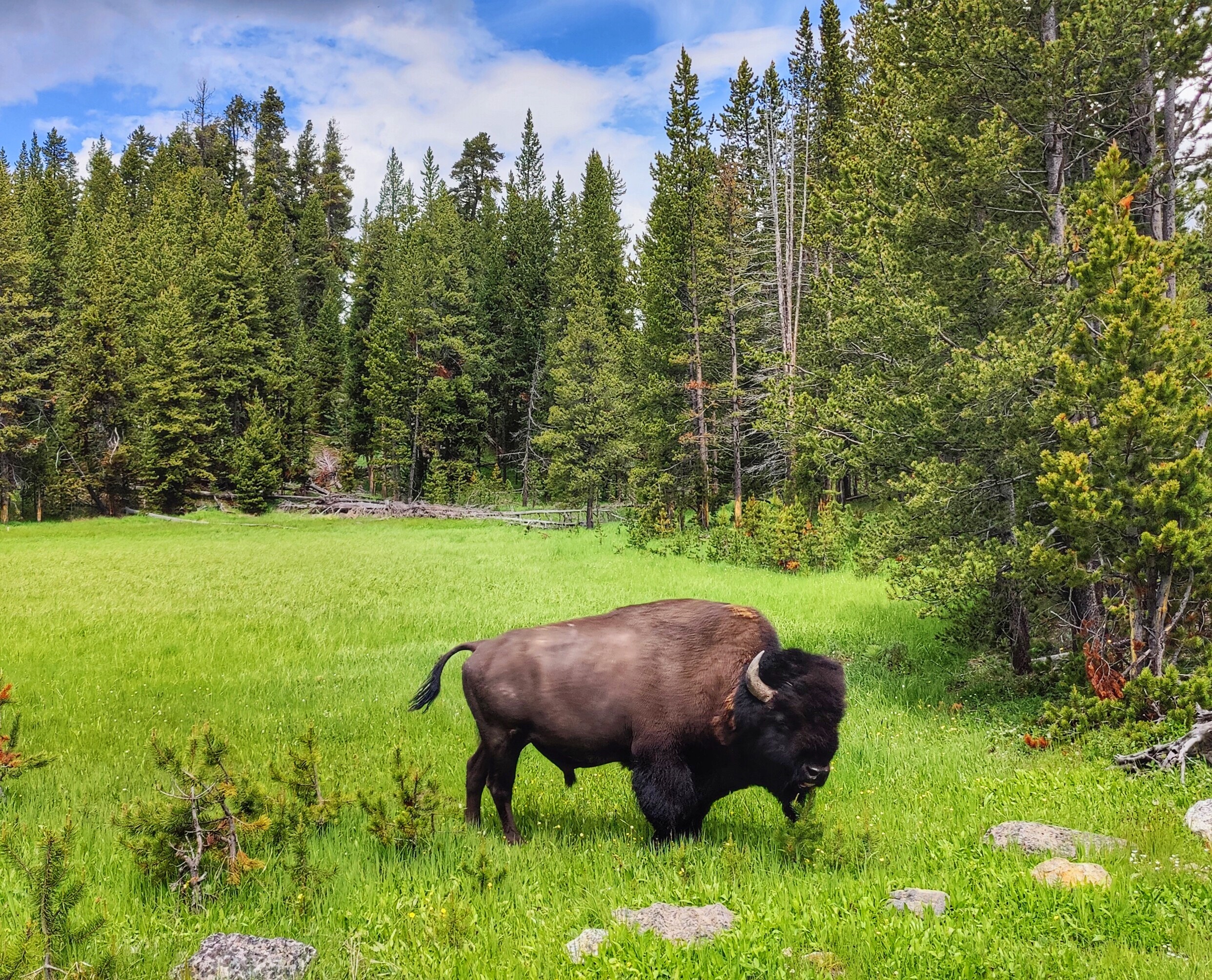
It probably won’t surprise anyone to see Yellowstone at the top of a wildlife list. Yellowstone is one of the best wildlife-watching destinations in the entire National Park System at any time of year, but fall brings some special opportunities. September is elk rut season. Bull elk can be heard bugling around areas including Mammoth Hot Springs and the Madison River, while black and grizzly bears may be seen feeding in roadside meadows. Hayden Valley also becomes a place to watch for migrating raptors. As fall continues into October, bears can move into lower elevations and the elk rut continues.
Where to look: Lamar Valley, Hayden Valley, Mammoth Hot Springs and the Madison River area.
2. Grand Teton National Park
Look for: Moose, elk, pronghorn, bison and bears
If there is anything better than seeing a moose, it might be seeing a moose with the Teton Range and golden fall foliage behind it. Grand Teton is already one of America’s great wildlife parks, and autumn brings even more activity. Elk and moose enter their breeding seasons. Pronghorn begin gathering and moving toward their winter range, elk migrate south, and bison also move toward lower elevations. Bears are busy too, searching for berries and other food as they add the fat they’ll need for winter.
Where to look: Moose-Wilson Road, Oxbow Bend, Antelope Flats, Willow Flats and areas around the Snake River.

3. Rocky Mountain National Park
Look for: Bugling elk and mule deer
If seeing the elk rut is on your national park bucket list, Rocky Mountain National Park deserves a spot near the top. During summer, many elk spend time at higher elevations. In fall, they move down into lower-elevation meadows for mating season. September and October are especially popular months for elk watching, with bulls bugling to attract females and establish dominance. Elk bugling is one of those sounds you will never forget after hearing it! Just remember that rutting elk are not animals you want to crowd. Rocky Mountain even institutes seasonal meadow closures in several popular elk areas during September and October to protect both the animals and visitors.
Where to look: Moraine Park, Horseshoe Park, Upper Beaver Meadows and the Kawuneeche Valley.

4. Great Smoky Mountains National Park
Look for: Elk, black bears, white-tailed deer and wild turkeys
You don’t have to travel west to hear an elk bugle. Great Smoky Mountains National Park has become an incredible place to see elk after the species was reintroduced to the park beginning in 2001. From early September through late October, elk gather into mixed herds for the rut. Bulls bugle, spar and compete for females—and those calls can travel an amazing distance through the mountain valleys. The Smokies are also home to black bears, white-tailed deer, wild turkeys and many other animals. Fields in several elk-viewing areas are closed to foot traffic during the September and October rut, so stay in designated areas and follow ranger directions
Where to look for elk: Cataloochee, Oconaluftee and Balsam Mountain. Cades Cove is well known for deer, turkey and occasional black bear sightings.
5. Olympic National Park
Look for: Roosevelt elk and spawning salmon
Olympic gives you a completely different kind of fall wildlife experience. First, there are the Roosevelt elk. These are the largest variety of elk in North America, and Olympic National Park protects the largest fully wild herd of Roosevelt elk in the Pacific Northwest. They are frequently seen in the park’s lower valleys and rainforests, including the Hoh Rain Forest. September and early October also overlap with the elk rut. But there’s another wildlife spectacle happening here in fall: salmon migration. Olympic’s rivers are home to all five species of Pacific salmon, and the National Park Service calls fall the best time to watch their dramatic journey upstream. Imagine spending the morning looking for elk in the rainforest and the afternoon watching salmon making their way upriver. That is a pretty great wildlife day.
Want to visit all 63 National Parks? Keep track of the parks you’ve visited (and the ones still on your list!) with my free 63 National Parks Tracker:
6. Denali National Park & Preserve
Look for: Moose, caribou, grizzly bears, Dall sheep and possibly wolves
Fall comes early in Alaska, so don’t plan this one using a Lower 48 calendar. Denali is famous for what is sometimes called its “Big Five”: moose, caribou, Dall sheep, grizzly bears and wolves. One particularly interesting fall sight is the moose rut. The National Park Service notes that moose tend to congregate around Miles 9–13 of the Park Road during fall breeding season. You’ll also have a chance of seeing caribou, bears and Dall sheep.
💡Regina’s Tip: Denali’s visitor season winds down quickly as fall progresses, and snow and winter conditions can arrive early. Check current transportation, road and facility information before planning a fall wildlife trip. This is definitely a September rather than late-October fall destination.
7. Acadia National Park
Look for: Migrating birds
Not every great fall wildlife experience has antlers. Acadia National Park sits along the Atlantic migration flyway, making it an important stopping point for birds traveling south. Protected habitats throughout the park give migrating birds places to rest and refuel before continuing their journeys. Songbirds that breed in Acadia also pass through during fall migration.
Where to look: Great Meadow around Sieur de Monts and wetland areas such as Bass Harbor Marsh can provide valuable habitat for migrating birds. Bring binoculars and give yourself some time to sit quietly and watch. And of course, this wildlife experience comes with a pretty spectacular bonus: Acadia’s famous fall scenery.
8. Voyageurs National Park
Look for: Beavers, bald eagles, otters and other northern wildlife
Here’s one I especially wanted to include because the fall wildlife story is so different. Beavers in autumn. Before the Minnesota winter arrives, beavers inspect and repair their lodges and prepare food supplies for the months ahead. At Voyageurs, where beavers are abundant, you may spot them swimming near shorelines, cutting trees or working around their lodges. Voyageurs’ mix of lakes, wetlands and forests also provides habitat for animals including otters, bald eagles, moose and wolves.
Where to look: Beaver Pond Overlook is one possibility, with early morning and late evening recommended for wildlife viewing.

9. Cuyahoga Valley National Park
Look for: Migrating birds, beavers and waterfowl
Here’s proof that you don’t necessarily need a huge western wilderness to have a great fall wildlife experience. Ohio’s Cuyahoga Valley National Park is particularly interesting during fall migration. September brings another wave of neotropical migrant birds traveling south, while later in fall you can see large flocks of blackbirds and migrating waterfowl. One of my favorite places to put on a wildlife-watching itinerary would be The Beaver Marsh. During fall, beavers collect and store branches for their winter food supply, while southbound waterfowl move through the wetlands. The migration can peak later in October. It’s a completely different wildlife experience from watching an elk rut – but that’s exactly why I love the variety of America’s national parks.
10. Theodore Roosevelt National Park
Look for: Elk, bison, wild horses, pronghorn and prairie dogs
The wide-open badlands of Theodore Roosevelt National Park make wildlife spotting part of the scenery. Bison roam the park year-round, and fall brings another unmistakable sound to listen for: bugling elk. During the September breeding season, mature bull elk gather groups of cows and challenge competing males. You’ll also want to keep an eye out for bison, pronghorn, mule deer, prairie dogs and the park’s famous horses. This is one of those parks where I’d be perfectly happy spending a few hours slowly driving the scenic road with binoculars beside me.
Wildlife Watching Tips for National Parks
The most important rule is also the simplest:
Wildlife needs space.
Don’t approach an animal because you want a better picture. Instead, bring binoculars or use a telephoto lens. National Park Service distance rules vary by park, but many parks require visitors to remain at least 25–50 yards from most wildlife and 100 yards from predators such as bears and wolves.
A few other things that can improve your odds:
- Get out early or stay until evening, when many animals are more active.
- Look along the edges of forests and meadows.
- Scan before you drive past – sometimes what looks like a rock isn’t a rock!
- Bring binoculars.
- Use designated pullouts rather than stopping in the roadway.
- Never feed wildlife.
- If an animal changes its behavior because of you, you’re too close.
And don’t get so focused on finding a bear or moose that you overlook the smaller wildlife around you. Birds, marmots, beavers, prairie dogs, foxes and dozens of other animals can end up becoming some of your favorite sightings.

Which National Park Is Best for Wildlife in Fall?
If I had to narrow this list down depending on what you most want to see:
For the biggest variety: Yellowstone
For moose: Grand Teton
For the elk rut: Rocky Mountain or Great Smoky Mountains
For Roosevelt elk + salmon: Olympic
For bears: Yellowstone or Great Smoky Mountains
For bird migration: Acadia
For something different: Voyageurs and its very busy beavers
But wildlife never follows an itinerary. That’s part of the fun. You can visit the perfect place at the perfect time and see nothing…and then round a corner somewhere you weren’t expecting and have one of the most memorable wildlife encounters of your entire trip. That’s why I’m always looking!

Planning a Wildlife-Watching Trip?
If one of these parks is calling your name, check current lodging options near a few of the most popular fall wildlife destinations:
Yellowstone | Grand Teton | Rocky Mountain | Great Smoky Mountains
Final Thoughts
Fall already has plenty going for it in the national parks: cooler temperatures, changing leaves and, in many places, fewer visitors than during peak summer.
Add bugling elk, migrating birds, hungry bears, spawning salmon, roaming moose and beavers preparing for winter, and I think there’s a pretty convincing argument that fall is one of the most exciting wildlife seasons of the year.
So grab the binoculars, keep the camera ready and remember to give every animal plenty of room.
Safe Travels,
Regina


