
Affiliate Disclosure: This post may contain affiliate links. If you make a purchase through one of these links, I may earn a small commission at no additional cost to you. As always, I only recommend products and services I believe will be helpful to fellow national park travelers.
There’s something about Yosemite National Park that photographs just can’t fully capture. The towering granite cliffs, enormous rock formations, peaceful meadows, and waterfalls make it one of the most recognizable national parks in the country. And in September 2026, I finally had the opportunity to experience Yosemite for myself.
As someone working toward Visiting all 63 U.S. National Parks, I had been looking forward to Yosemite for a long time. And while I did plenty of research before our trip, there are a few things that are especially helpful to understand before visiting. If you’re planning your first trip to Yosemite National Park, I’m sharing some practical tips, must-see sights, and things to consider when planning your visit. The good news? You don’t have to be an experienced hiker to enjoy Yosemite. Some of its most incredible scenery can be enjoyed from overlooks, short walks, and scenic drives.
1. Yosemite Is Much Bigger Than You Might Expect
One of the first things to understand about Yosemite is just how large the park is. Yosemite covers nearly 1,200 square miles in California’s Sierra Nevada mountains. While Yosemite Valley contains many of the park’s famous landmarks, it’s only a small portion of the park. For a first visit, I recommend concentrating on Yosemite Valley before trying to explore the more distant areas. This is where you’ll find many of the sights you’ve probably seen in photographs, including:
- El Capitan
- Half Dome
- Yosemite Falls
- Bridalveil Fall
- Cook’s Meadow
- Tunnel View
If you have additional days, you can explore Glacier Point, Mariposa Grove of Giant Sequoias, or Tioga Road when those areas are accessible.
💡Regina’s Tip: Don’t try to see the entire park in one day. Yosemite deserves time to simply enjoy the scenery instead of rushing between stops.
2. Choosing Where to Stay Makes a Difference
For my September trip, I stayed in Mariposa, a gateway town outside Yosemite National Park. Mariposa offers vacation rentals, hotels, restaurants, and other amenities, making it an option for visitors who don’t stay inside the park. It’s a pretty small town, but there is a cute little downtown area and you’ll likely find everything you need here. We entered Yosemite through the Arch Rock entrance on Highway 140.
If you’re deciding where to stay, consider the amount of driving you’re comfortable doing each day. Accommodations outside the park may offer more options, but the drive to Yosemite Valley adds time to your itinerary. Staying inside Yosemite Valley can be especially convenient if you want to enjoy early mornings and evenings without the additional commute, but places fill up quickly and the closer you are the more they cost.
💡Regina’s Tip: Look at driving times to Yosemite Valley, not simply the distance from your accommodations to the park entrance. Those are two very different things.
3. Arrive Early and Use the Yosemite Valley Shuttle
Yosemite Valley is popular, and parking can be one of the biggest challenges during busy periods. Even in September, which is a less busy time than summer, the parking was a challenge. My recommendation is to arrive early, find a parking space, and plan to explore much of the Valley on foot and absolutely use the free shuttle system. Also remember that when driving Yosemite Valley has one-way roads in several areas. Missing a turn can mean driving farther than you intended.
Yosemite operates free shuttles serving many of the main visitor areas and trailheads throughout the Valley. Before your trip, familiarize yourself with the shuttle map and identify the stops closest to the places you want to visit. There are 2 shuttle lines : the Valleywide shuttle (green) goes around the entire valley and will take considerably longer if you ride the whole way; the East Valley shuttle (purple) does a much shorter loop. Make sure you know what shuttle to get on. For example, when we went from the Welcome Center to Happy Isles stop, the purple shuttle was a much quicker trip than the green shuttle. But returning from Happy Isles to the Welcome Center either shuttle takes the same about of time. One important detail: Not every Yosemite attraction is served by the Valley shuttle. For example, Bridalveil Fall has its own parking area and isn’t directly served by the Valley shuttle.
💡Regina’s Tip: Download maps before you arrive. Cell service is unreliable, and knowing where you plan to park and which shuttle stops to use will make your day much easier.

4. You Don’t Need Difficult Hikes to Experience Yosemite
One of the things I love about national parks is that everyone can experience them differently. I am a big believer that the National Parks are for everybody – all ages and abilities. Some visitors come to Yosemite to hike the challenging trails, while others prefer scenic drives, photography, short walks, and enjoying the views. There’s room for both.
Here are a few great places to include on a first-time Yosemite itinerary.
Tunnel View
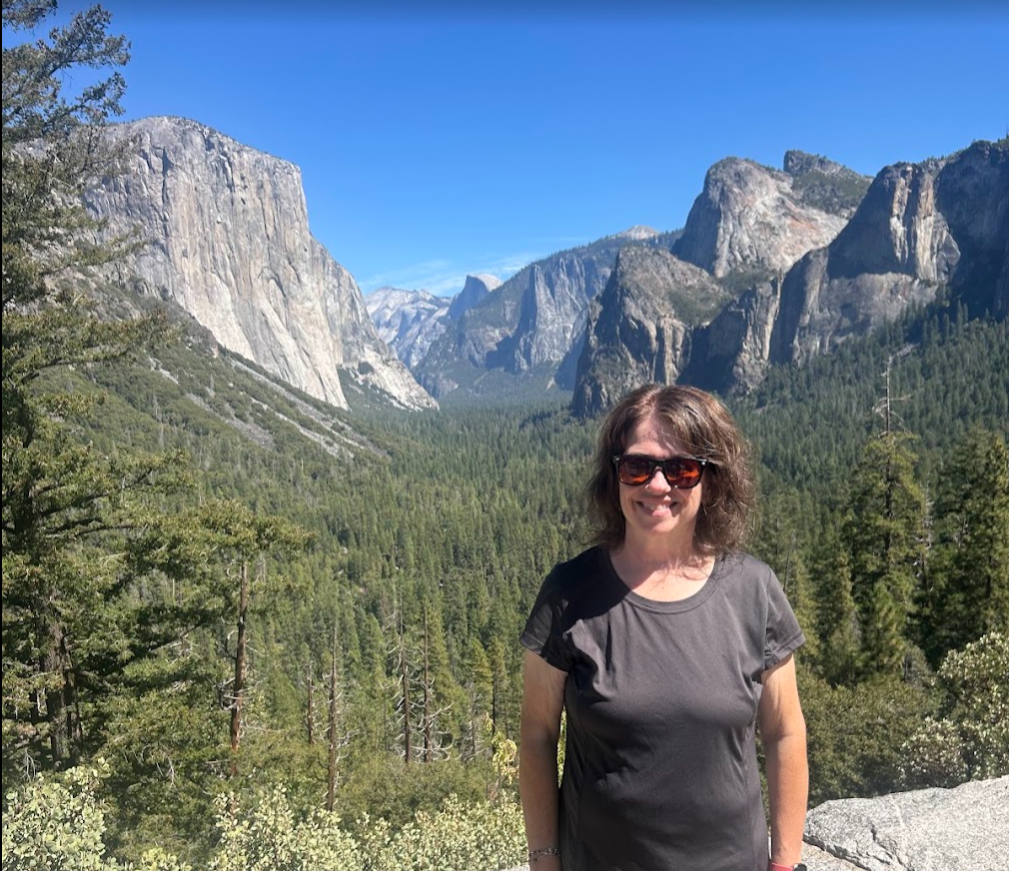
This is one of Yosemite’s most iconic viewpoints. From Tunnel View, you can see El Capitan, Half Dome in the distance, and Bridalveil Fall. It’s a spectacular introduction to Yosemite Valley and requires very little walking from the parking area. It’s a must see!

Cook’s Meadow
Cook’s Meadow is an excellent choice for visitors who want beautiful scenery without a strenuous hike. The approximately one-mile loop is mostly flat and offers views of Half Dome, Yosemite Falls, and the surrounding granite cliffs. It’s also a wonderful place to slow down, take photographs, and appreciate the scale of the Valley.
Bridalveil Fall
Bridalveil Fall is another classic Yosemite stop. A short, approximately half-mile round-trip trail leads toward the base of the waterfall. The experience changes throughout the year, with powerful water flow in spring and generally lighter flow later in the season. In September, the fall was pretty light and not nearly as impressive as spring.

El Capitan Even if you’re not a rock climber, El Capitan is something you shouldn’t miss.
This enormous granite formation rises above Yosemite Valley and is one of the park’s most famous landmarks. You can appreciate its scale from several viewpoints around the Valley, including El Capitan Meadow. Be sure to look closely to see if you can spot climbers!
Vernal Fall
If you’d like something more challenging, consider hiking toward Vernal Fall. The walk to the Vernal Fall Footbridge is approximately 1.6 miles round trip, with about 400 feet of elevation gain. Don’t let the relatively short distance fool you. It’s an uphill walk and is rated moderate. The full hike to the top of Vernal Fall is more demanding and isn’t necessary to appreciate this beautiful part of the park. For me the hike to the footbridge was challenging enough.
💡Regina’s Tip: Choose hikes based on elevation gain and difficulty, not just distance. A short trail in Yosemite can still be challenging.

Glacier Point
If you have time and the road is open (and traffic isn’t too bad), take the drive to Glacier Point. The views are stunning and give you a whole different perspective after being in the Valley.

5. The Waterfalls Look Different Depending on the Season
Yosemite is famous for its waterfalls, but something many first-time visitors may not realize is how dramatically the water flow changes throughout the year. Spring and early summer generally bring the strongest waterfall flows as snow melts in the Sierra Nevada. By late summer and early fall, some waterfalls slow significantly or dry up. I visited in September, which is generally a quieter time for waterfalls compared with spring. If seeing Yosemite Falls at its most powerful is a major priority, late spring is usually a better choice. However, fall has its own appeal, including cooler temperatures, seasonal colors, and less crowds.
💡Regina’s Tip: There really isn’t one perfect season for every visitor. Decide what’s most important to you before choosing your dates.
6. Make Time for the Yosemite Visitor Center
If you’re like me and collect National Park Passport stamps, you’ll want to stop at the visitor center. The Yosemite Exploration Center, formerly the Yosemite Valley Visitor Center, is located in Yosemite Village. It’s a good place to learn more about the park’s geology, wildlife, and history. I always enjoy visiting national park visitor centers because they help me appreciate what I’m seeing beyond the beautiful scenery. And of course, getting my passport stamp is part of every national park adventure!


7. Plan Your Day, But Leave Room to Explore
It’s easy to create a long list of everything you want to see in Yosemite. And there is certainly no shortage of incredible places to visit. But one of my biggest pieces of advice for first-time visitors is to avoid packing your schedule too tightly. Yosemite is the kind of place where you’ll want to stop frequently for photographs, enjoy unexpected views, and spend a little extra time simply taking it all in. Build your itinerary around a handful of must-see attractions, then allow yourself some flexibility. If you only have one full day, concentrate on Yosemite Valley. With two or three days, you can explore more of the park at a comfortable pace.
I really liked using GuideAlong’s Yosemite audio tour. You learn so much more than you would have otherwise! There are 200+ Audio Points and you can start from any entrance. If you purchase thru my link, it gives me a small commission at no additional cost to you (thank you!)
8. What I Would Tell Someone Visiting Yosemite for the First Time
After planning our September trip, these are the reminders I’d share with anyone preparing for their first visit.
Don’t underestimate driving distances. Yosemite is enormous, and traveling between different areas takes time.
Don’t assume all waterfalls will be flowing strongly. The season makes a significant difference.
Don’t rely entirely on your phone. Download maps and important trip information ahead of time.
Don’t skip the easy walks. Some of Yosemite’s most memorable scenery doesn’t require a challenging hike.
Don’t try to do everything. It’s better to fully enjoy a few incredible places than rush through the entire park.
And most importantly, remember that there isn’t a right or wrong way to experience Yosemite. Whether you’re hiking for miles or enjoying the views from a peaceful meadow, you’re experiencing something special.
🏞️ Love Yosemite? Bring the National Parks to Your Mailbox!
Yosemite is the featured park for October 2026 in my Visit All U.S. National Parks Mail Club!
Each month, you’ll receive a little national park adventure delivered right to your physical mailbox, including a beautiful 5×7 postcard, an exclusive illustrated art collector card, a story from the park, a fun activity, and collectible stickers. It’s a fun, screen-free way to celebrate America’s national parks, whether you’re planning your next adventure, remembering a favorite trip, or dreaming of visiting all 63.
Just $9.99/month with free U.S. shipping! Subscribers get the best price!
Missed the Yosemite edition? Past editions are available for one-time purchase while supplies last, at a slightly higher price than the monthly subscription. No subscription required!

Frequently Asked Questions About Visiting Yosemite
How many days do you need for Yosemite National Park?
I recommend at least two full days for a first visit, although three days will give you more flexibility. If you only have one day, focus on Yosemite Valley.
What is the best month to visit Yosemite?
May and June are popular for waterfalls, while September and October can be beautiful for cooler weather and sightseeing. Summer provides access to more high-elevation areas but also brings significant crowds.
Can you see Yosemite without hiking?
Absolutely! Yosemite Valley offers incredible scenery from roadsides, overlooks, and easy walking paths. You don’t need to complete strenuous hikes to see many famous landmarks.
Do you need a reservation to enter Yosemite?
Yosemite did not require an entrance reservation in 2026, although regular entrance fees and separate permit requirements still applied. Always check the National Park Service website for current entrance policies before your visit.
Is Yosemite worth visiting in September?
Yes! September can be a wonderful month to visit Yosemite. Waterfall flow may be lower, but the granite cliffs, scenic viewpoints, and Yosemite Valley remain spectacular.
Final Thoughts: Is Yosemite Worth Visiting?
Absolutely! Yosemite is one of those national parks that deserves its reputation. Between the towering granite cliffs, peaceful meadows, waterfalls, and beautiful views, it’s a destination that belongs on every national park lover’s travel list.
My September trip reminded me why I love exploring America’s national parks. Every park offers something different, and Yosemite is certainly one I won’t forget. If you’re preparing for your first Yosemite adventure, give yourself time to enjoy it. You don’t need to see everything or hike every trail to have a memorable trip. Sometimes, simply standing beneath those enormous granite walls and taking in the view is enough.
Planning to visit all 63 U.S. National Parks? Download my free National Parks Tracker Bundle to keep track of the parks you’ve visited and the adventures still ahead!
Happy Exploring,
Regina


