
This post contains affiliate links. If you make a purchase or booking through one of these links, I may earn a small commission at no additional cost to you.
Utah has five national parks, and somehow each one manages to look completely different from the one before it. There are the towering canyon walls of Zion, the orange hoodoos of Bryce Canyon, the surprisingly varied landscape of Capitol Reef, the impossible-looking formations of Arches, and the enormous desert vistas of Canyonlands.
Best of all? You can visit all five on one incredible road trip.
Known as Utah’s Mighty 5, these parks make one of the best national park road trips in the United States. If visiting all 63 U.S. National Parks is on your bucket list, this trip lets you check off five of them in a single adventure.
A week is enough time to experience the highlights, although I’ll warn you now: you’ll probably leave wishing you had a few more days. Here’s how I would plan a 7-day Utah national parks road trip, including the best route, how long to spend in each park, and what you won’t want to miss along the way.

The Utah Mighty 5 National Parks
Utah’s five national parks are:
- Zion National Park
- Bryce Canyon National Park
- Capitol Reef National Park
- Arches National Park
- Canyonlands National Park
Although they’re all in southern Utah, don’t make the mistake of thinking they’re basically the same park five times over. They’re not.
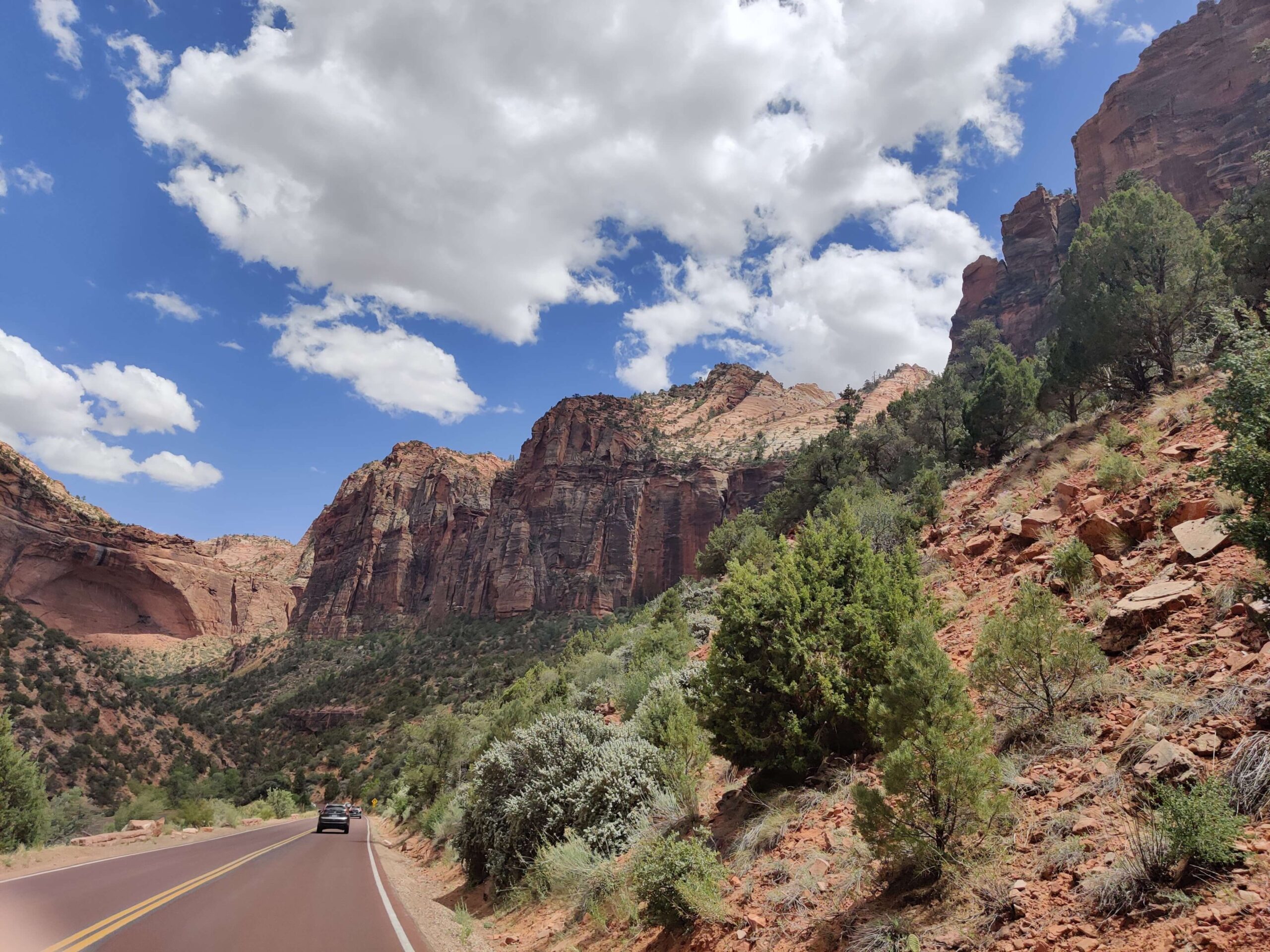
Zion feels massive and dramatic, with sheer sandstone walls rising above the canyon floor.
Bryce Canyon is filled with thousands of colorful rock spires called hoodoos.
Capitol Reef combines cliffs, canyons, historic orchards and some of the most beautiful scenic driving in Utah.
Arches contains more than 2,000 documented natural stone arches.
And Canyonlands feels almost limitless, with layer after layer of canyons stretching toward the horizon.
That’s what makes this road trip so much fun.
How Many Days Do You Need for the Utah Mighty 5?
I recommend at least 7 days for your first Mighty 5 road trip. Can you visit all five parks in five days? Technically, yes. Would I recommend it? Not really. With only five days, you’ll spend a lot of your trip driving from park to park and checking parks off a list instead of actually experiencing them. Seven days gives you enough time to see the major highlights without making every day feel like a race. If you have 8–10 days, even better. You’ll have time for longer hikes, additional scenic drives and a little breathing room when weather or crowds don’t cooperate. For this itinerary, we’re going with seven days.
Where Should You Start Your Utah National Parks Road Trip?
One of the easiest ways to do the Mighty 5 is to fly into Las Vegas, begin at Zion National Park and work your way east toward Moab. Your route looks like this:
Las Vegas → Zion → Bryce Canyon → Capitol Reef → Arches → Canyonlands → Moab
You can then return to Las Vegas or continue toward Salt Lake City depending on airfare and your travel plans. The route also works in reverse. Don’t get too hung up on which direction is “correct.” Airfare, rental car prices and lodging availability may make that decision for you.
🏨 Where to Stay on This Utah Mighty 5 Road Trip
One of the nice things about this route is that you only need four lodging bases for the entire trip:
- Zion: Springdale — closest and most convenient for Zion Canyon
- Bryce Canyon: Bryce Canyon City or Tropic
- Capitol Reef: Torrey
- Arches + Canyonlands: Moab — stay here for three nights and visit both parks
Day 1: Zion National Park
There is something about driving into Zion National Park for the first time that makes you understand immediately why it’s one of America’s most visited national parks. The canyon walls seem to rise straight out of the ground around you. Give Zion your first full day rather than treating it as a quick stop.
What to See at Zion
For a first visit, concentrate on Zion Canyon.
Some of the most popular experiences include:
- Zion Canyon Scenic Drive
- Riverside Walk
- The Narrows
- Emerald Pools
- Canyon Overlook Trail
- Angels Landing
You won’t have time to do everything in one day, so choose your priorities before arriving. If Angels Landing is on your list, remember that a permit is required. The Narrows also depends heavily on current weather, water levels and conditions. During much of the year, Zion Canyon Scenic Drive is accessed using the park shuttle rather than your own vehicle. Build a little extra time into your day for parking and shuttle transportation.
Where to stay: Springdale is the most convenient base for visiting Zion.
Day 2: Zion to Bryce Canyon National Park
Spend the morning enjoying anything you missed at Zion before heading toward Bryce Canyon. And don’t think of the drive as wasted time. The route leaving Zion through the east entrance is part of the experience, with switchbacks, tunnels and incredible sandstone scenery along the way. Eventually, the landscape begins changing again. By the time you reach Bryce Canyon, you’ll be looking at something completely different.
What to See at Bryce Canyon
If you only have part of a day at Bryce, make the Bryce Amphitheater your priority.
Start with overlooks such as:
- Sunrise Point
- Sunset Point
- Inspiration Point
- Bryce Point
If you have time for a hike, walking down among the hoodoos gives you an entirely different perspective than seeing them from above. Even if you don’t plan to hike, Bryce Canyon is still worth the stop. Several of its most spectacular viewpoints are just a short walk from the parking areas, so you can see the famous hoodoos without doing a long trail. And if possible, stay for sunset – or get up early enough for sunrise the following morning.
Where to stay: Bryce Canyon City or nearby Tropic.

Day 3: Bryce Canyon to Capitol Reef National Park
Today includes one of the highlights of the entire road trip, and it isn’t even inside a national park. You’ll travel from Bryce Canyon toward Capitol Reef along Utah Scenic Byway 12. This is not a day when I would simply type the destination into the GPS and try to arrive as quickly as possible. Give yourself time. The road passes through some spectacular southern Utah scenery, and you’ll probably stop more often than you expect. Eventually you’ll arrive at Capitol Reef National Park.
What to See at Capitol Reef
Capitol Reef tends to get less attention than Zion and Arches, which is a shame. The park protects part of the Waterpocket Fold, a huge wrinkle in the Earth’s crust extending for nearly 100 miles. For a shorter visit, concentrate on the Fruita Historic District and the main scenic areas of the park.
Depending on current road conditions, possible stops include:
- Fruita Historic District
- Petroglyph panels
- Capitol Reef Scenic Drive
- Grand Wash
- Goosenecks Overlook
- Panorama Point
One of the things that makes Capitol Reef different from the other Mighty 5 parks is its human history. Historic orchards planted by early settlers still grow in Fruita today. This is one park I wouldn’t rush through just because its name isn’t as famous as Zion or Arches.
Where to stay: Torrey.
Day 4: Capitol Reef to Moab
You could drive straight from Capitol Reef to Moab. But where’s the fun in that? Use the morning to see anything you missed at Capitol Reef before continuing east. Once you reach Moab, unpack. You’re going to stay here for the next few nights. That’s one of the things I love about the second half of this road trip. Both Arches and Canyonlands can be visited from the same home base, which means no packing up the hotel room every morning. If you’ve arrived early enough, this can also be a great evening to get your first taste of Arches. The red rock becomes especially beautiful when the sun begins to drop.
Where to stay: Moab.
Day 5: Arches National Park
If there’s one landscape almost everyone immediately associates with Utah, it’s probably Delicate Arch. But Arches National Park has much more than its most famous formation. The park contains more than 2,000 documented natural stone arches, along with enormous sandstone fins, balanced rocks and other formations that often look as though they shouldn’t still be standing.
What to See at Arches
For your first visit, some of the major stops to consider include:
- Delicate Arch
- The Windows
- Double Arch
- Balanced Rock
- Park Avenue
- Devils Garden
You won’t need to hike every trail to have a great day at Arches. Several impressive formations are visible after short walks from parking areas. If Delicate Arch is a priority, decide ahead of time whether you want to hike to the arch itself or see it from one of the viewpoints. As of 2026, Arches does not require a timed-entry reservation to enter the park, but that doesn’t mean crowds have disappeared. Parking areas can fill and access may temporarily be restricted when areas become congested. Arriving early and staying flexible will make your day much easier.
Where to stay: Moab.

Day 6: Canyonlands National Park
Your fifth national park! Canyonlands is huge, and this is important to understand before visiting: its different districts are not connected by roads inside the park. For a first-time Mighty 5 trip, Island in the Sky is generally the easiest district to combine with a stay in Moab. And the views are enormous. Where Arches draws your attention toward individual rock formations, Canyonlands makes you step back and look at the entire landscape.
What to See at Island in the Sky
Consider stops such as:
- Mesa Arch
- Grand View Point
- Green River Overlook
- Shafer Canyon
- Upheaval Dome
Mesa Arch is particularly famous at sunrise, although you’ll be sharing the experience with plenty of photographers if you choose that time of day. Whatever time you visit, give yourself a chance to simply stand at one of the overlooks. Canyonlands is a park that makes you appreciate just how enormous the Colorado Plateau really is.
Where to stay: Moab.
Day 7: Moab and the Trip Home
You’ve officially visited all five of Utah’s national parks. If your flight schedule allows, use the final morning for anything you missed around Moab. You could return to Arches, spend a little more time at Canyonlands or simply enjoy a slower morning before beginning the trip home. From here, you can head toward Salt Lake City or make the longer return drive to Las Vegas.
And if you’ve caught the national park road-trip bug? Start figuring out which parks you’re going to visit next! Here’s a couple of ideas:


When Is the Best Time for a Utah National Parks Road Trip?
For most travelers, spring and fall are the sweet spots.
- Spring – March through May brings generally pleasant hiking weather, although higher elevations – especially Bryce Canyon – can still see winter conditions.
- Summer – it’s possible, but temperatures can become extremely hot at lower-elevation parks. You’ll need to plan hiking carefully and carry plenty of water.
- Fall – September and October are another excellent choice, with cooler temperatures and beautiful conditions across much of southern Utah.
- Winter – brings fewer crowds and the possibility of snow-covered red rock, particularly at higher elevations. It’s gorgeous, but winter weather can also affect roads, trails and travel plans.
No matter when you visit, remember that these five parks span different elevations and environments. The weather at Bryce Canyon can be completely different from the weather in Moab on the very same day.
Do You Need Reservations for the Utah Mighty 5?
You do not currently need a general timed-entry reservation simply to enter any of Utah’s five national parks. However, that doesn’t mean you can arrive without planning. Specific activities, campgrounds and hikes may require permits or reservations. Angels Landing at Zion is one of the best-known examples. Rules also change.
Before any national park trip, I recommend checking the individual park’s official National Park Service website shortly before you leave rather than relying on something you read months earlier.
Is the America the Beautiful Pass Worth It for the Mighty 5?
If you’re visiting all five parks – and especially if you’re planning additional national park trips during the year – check the current price of the America the Beautiful annual pass before buying individual entrance passes. One annual pass covers entrance fees at more than 2,000 federal recreation sites, including national parks that charge entrance fees. It’s worth doing the math before your trip.
Which Utah National Park Is the Best?
Of course, I’m not going to make you choose. That’s the beauty of doing the entire Mighty 5 road trip.
Zion gives you towering canyon walls. Bryce gives you hoodoos. Capitol Reef gives you history, scenic drives and a landscape many travelers underestimate. Arches gives you some of the most recognizable rock formations in America. Canyonlands gives you sheer scale.
Put them together, and you have one of the most spectacular national park road trips in the country.
Planning Your Own Utah Mighty 5 Road Trip
Seven days gives you a fantastic introduction to Utah’s five national parks, but there’s easily enough to fill a longer trip. The biggest mistake I’d avoid is trying to see absolutely everything.
💡Regina’s Tip: Pick a few experiences in each park that matter most to you. Leave room for scenic stops. Watch the sunset. Change plans when you find somewhere you don’t want to leave yet. That’s part of the fun of a road trip!
And when you finally stand in your fifth Utah national park, you’ll get to mark five more parks off your national parks checklist.
Not bad for one week.
Happy exploring,
Regina


